Analysis of Iron Pipe Fracture During Bending on CNC Pipe Bending Machine
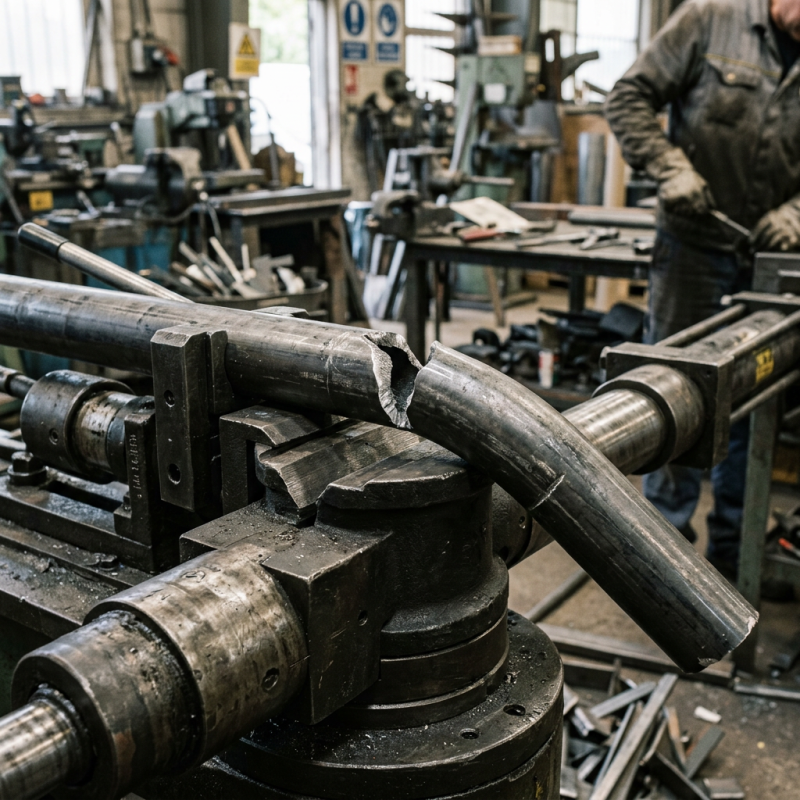
A heavy steel pipe is shaped in a busy metalworking workshop using industrial bending equipment.
1. Material-related Causes
Excessive material hardness, low ductility and poor elongation of iron pipe. The material cannot withstand tensile deformation on the outer arc during bending, resulting in cracking.
Material defects: internal slag inclusion, porosity, cracks or delamination inside the raw pipe. Defects expand under bending stress and cause fracture.
Improper material grade selection. Selected iron pipe is not suitable for cold bending process.
Uneven wall thickness of raw tube. Thin-wall section bears concentrated tensile stress and breaks preferentially.
2. Pipe blank and pre-processing factors
Too small wall thickness factor (thin wall pipe). The outer wall of bending zone is severely stretched and exceeds the material forming limit.
Oxide scale, rust or surface scratches on pipe surface. Surface defects become stress concentration points and expand into fractures.
Improper cutting section. Uneven pipe end burrs induce local stress concentration during bending.
3. Tooling and mould issues
Bending die radius is too small. The smaller bending radius leads to larger tensile strain on the outer fiber of pipe, exceeding material elongation limit.
Mandrel position error. Mandrel is retracted too far, losing support for pipe inner wall; wrinkles and outer wall cracking occur.
Improper clearance between wiper die and pipe. Excessive clearance cannot restrain pipe deformation; too small clearance scratches pipe surface and causes crack initiation.
Serious wear of mould, sharp edges on mould surface, which scratch pipe during bending.

Leave a Reply