

소개
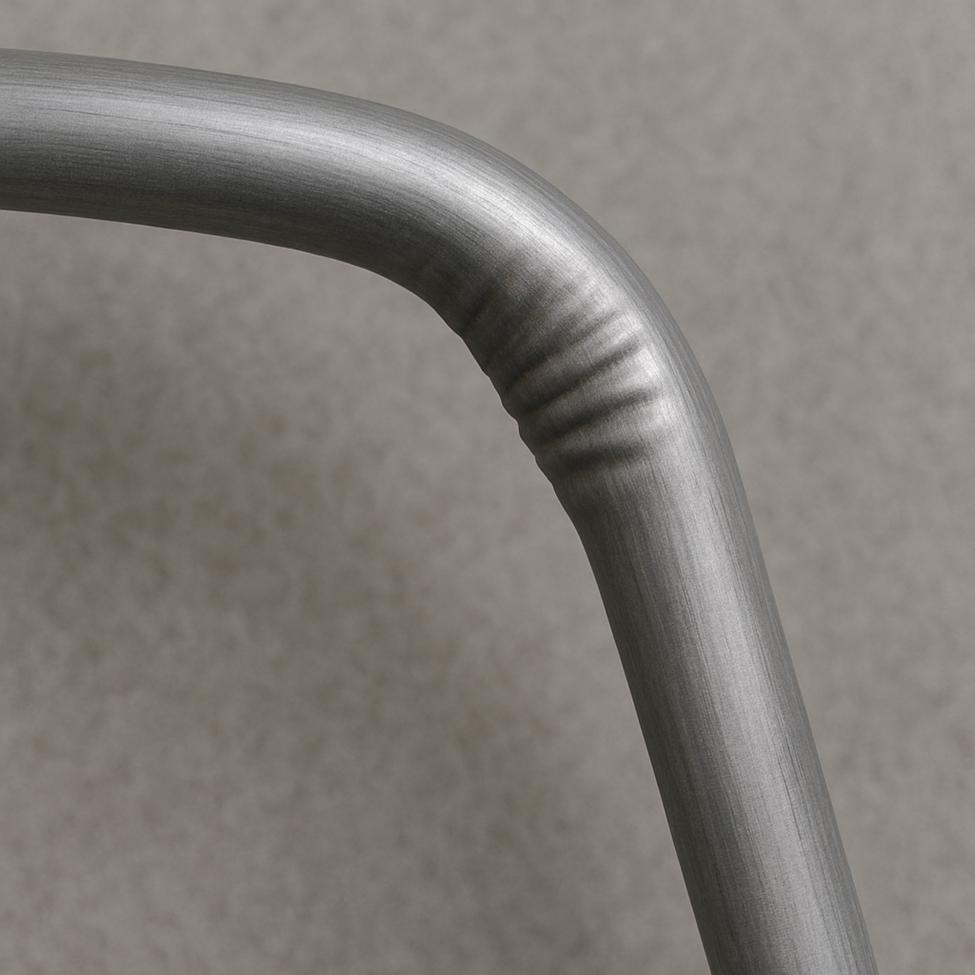
Tube bending is widely used in industries such as automotive exhaust systems, furniture manufacturing, bicycle handlebar production, HVAC systems, and industrial piping. During the bending process, one of the most common quality defects is pipe wrinkling, which appears on the inner radius of the bend. Wrinkling not only affects product appearance but can also reduce structural strength, dimensional accuracy, and product reliability.
This article analyzes the main causes of tube wrinkling and provides practical solutions used in modern CNC tube bending operations.
What Is Pipe Wrinkling?
Pipe wrinkling refers to the formation of folds, waves, or buckles on the inside wall of a tube during bending. When the tube is bent, the outer wall is stretched while the inner wall is compressed. If the compressive force exceeds the tube’s ability to resist deformation, wrinkles can develop.
Common symptoms include:
- Waves on the inner radius
- Surface folds
- Material buckling
- Reduced flow area inside the tube
- Poor appearance and dimensional accuracy
Main Causes of Pipe Wrinkling
1. Insufficient Mandrel Support
The mandrel supports the inside diameter of the tube during bending. If the mandrel position is incorrect or the mandrel is not used when required, the tube wall may collapse and wrinkle.
Typical situations:
- Thin-wall stainless steel tubes
- Small bend radius applications
- Large-diameter tubes
2. Incorrect Pressure Die Settings
The pressure die helps control material flow during bending. Insufficient pressure allows the tube to move uncontrollably, increasing the likelihood of wrinkles.
Indicators:
- Wrinkles appear only at the beginning of the bend.
- Wrinkles are inconsistent between production batches.
3. Tube Wall Thickness Is Too Thin
Thin-wall tubes have lower resistance to compression during bending.
High-risk condition:
Wall Thickness / Tube Diameter Ratio < 5%
4. Bend Radius Is Too Small
A tight bend radius increases compressive stress on the inside wall.
For example:
- Tube OD: 38 mm
- CLR: 38 mm (1D bending)
Such applications typically require mandrel bending technology.
5. Improper Wiper Die Adjustment
The wiper die is designed to prevent wrinkles from forming at the tangent point of the bend.
Problems may occur when:
- The wiper die is worn.
- The angle is incorrect.
- Installation clearance is excessive.
6. Material Quality Issues
Variations in material properties can affect bending performance.
Common examples:
- Inconsistent wall thickness
- Low-quality welded tubes
- Excessively soft material
Effective Solutions to Prevent Wrinkling
Solution 1: Use a Mandrel
Mandrel bending is the most effective method for controlling wrinkles.
Benefits:
- Supports the tube interior
- Reduces wall collapse
- Improves bend quality
- Allows tighter bend radii
Solution 2: Optimize Mandrel Position
A common starting point is positioning the mandrel nose slightly beyond the tangent point.
Benefits:
- Better material support
- Improved wrinkle control
- Consistent production quality
Solution 3: Install a Wiper Die
For thin-wall tubes and tight-radius bends, a properly adjusted wiper die is essential.
Benefits:
- Eliminates inner-wall wrinkles
- Improves surface finish
- Increases dimensional accuracy
Solution 4: Increase CLR (Centerline Radius)
When design requirements permit, increasing the bend radius reduces compressive stress.
Example:
- Original CLR = 1D
- Improved CLR = 2D
This often significantly reduces wrinkling.
Solution 5: Optimize Clamp and Pressure Die Force
Proper machine setup is critical.
Operators should:
- Adjust clamp pressure
- Optimize pressure die assistance
- Verify lubrication conditions
- Conduct sample bending tests
Solution 6: Use High-Quality Tubing
Selecting tubing with consistent dimensions improves bending results.
Recommended materials:
- Precision stainless steel tube
- DOM tube
- High-quality seamless tube
Real-World Applications
Automotive Exhaust Systems
Automotive exhaust pipes often require multiple tight-radius bends. Mandrel bending technology prevents wrinkles while maintaining exhaust flow performance.
Bicycle Handlebars
Bicycle handlebars require precise bends and attractive surface finishes. CNC mandrel tube bending machines are commonly used to achieve wrinkle-free results.
Metal Furniture Production
Chair frames, bed frames, and table structures rely on smooth bends for both appearance and structural integrity. Proper tooling setup is essential for mass production.
HVAC and Industrial Tubing
Wrinkle-free bends improve airflow efficiency and ensure compliance with industry quality standards.
Recommended Equipment
For manufacturers processing stainless steel, carbon steel, aluminum, or furniture tubes, a CNC mandrel tube bending machine equipped with:
- Multi-ball mandrel system
- Wiper die assembly
- Pressure die assist
- Servo-controlled positioning
can significantly reduce wrinkling and improve production consistency.
결론
Pipe wrinkling is primarily caused by excessive compression on the inner radius during bending. Factors such as inadequate mandrel support, improper tooling adjustment, thin wall thickness, and small bend radii can all contribute to the problem. By optimizing tooling, machine parameters, and material selection, manufacturers can achieve high-quality, wrinkle-free bends suitable for demanding industrial applications.
Modern CNC tube bending technology provides effective solutions that improve productivity, reduce scrap rates, and ensure consistent product quality across a wide range of industries.
 English
  Bahasa Indonesia
  한국어
한국어  Português do Brasil
  Polski
  Русский
  Español de México
  ไทย
ไทย  Tiếng Việt
댓글 남기기